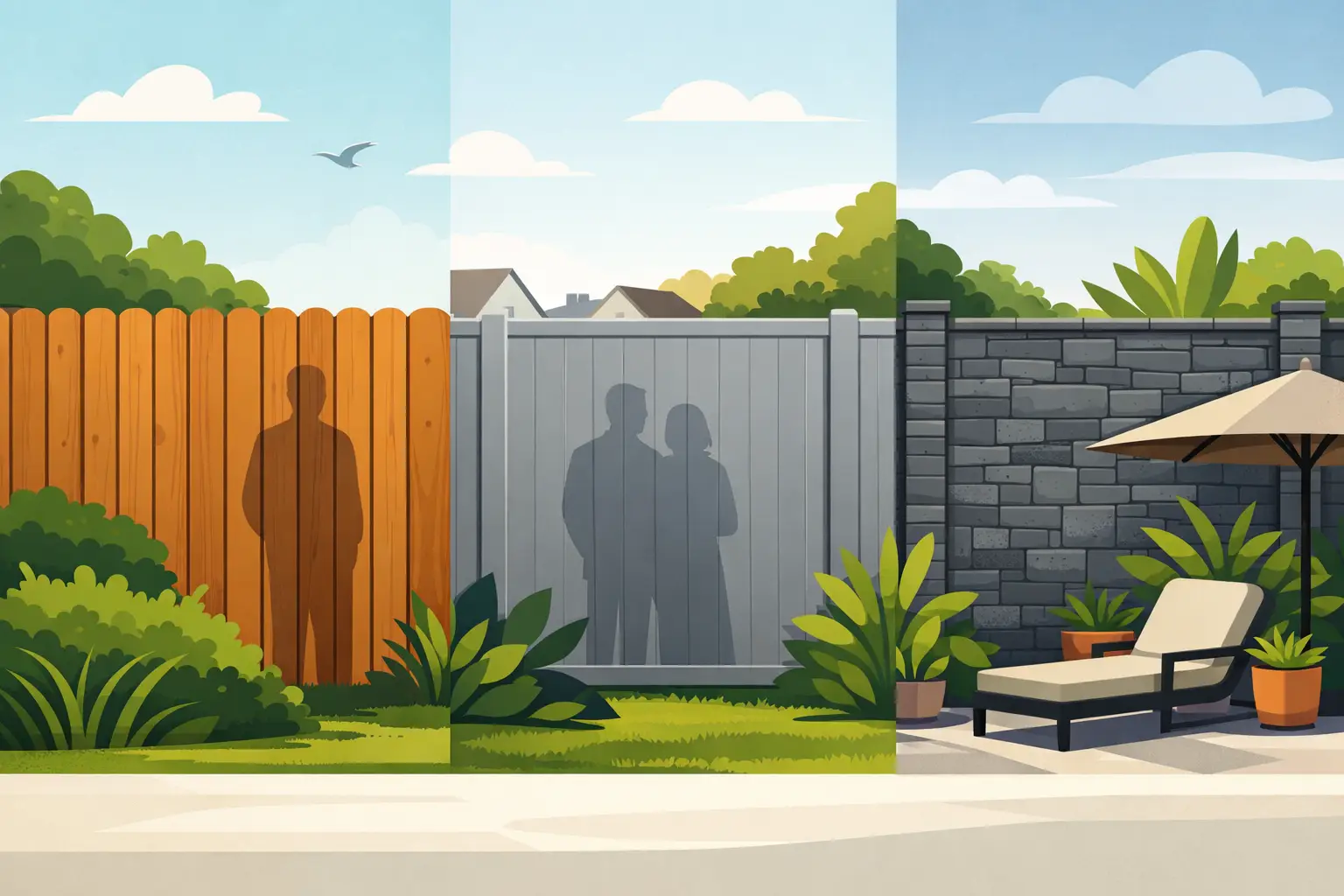
A fence can look solid on paper and still leave you feeling exposed once it is up. That usually happens when homeowners focus only on height, without thinking about gaps, ground levels, wind, maintenance and how the boundary is actually used. If you are asking what fence is best for privacy, the right answer is usually a closeboard or solid panel fence - but the best choice depends on your garden, budget and how long you want it to last.
For most homes in Lancashire, privacy fencing needs to do more than block a view. It also has to cope with wet weather, gusty conditions and gardens that are not always flat or perfectly square. A fence that gives excellent screening in a sheltered new-build garden may not be the best option for an exposed boundary in Blackburn, Burnley or Preston. That is why material, construction and installation quality matter just as much as the look of the fence itself.
What fence is best for privacy in most gardens?
If the main aim is to stop overlooking from neighbouring properties, closeboard fencing is often the strongest all-round option. It is built from overlapping vertical boards fixed closely together, which creates a dense boundary with very few visible gaps. Done properly, it gives a more secure and private finish than lighter decorative panels, and it generally stands up better in poor weather.
Traditional overlap panels can also work well for privacy, particularly where cost is a bigger factor. They are widely used, familiar in appearance and quicker to install than some bespoke systems. The trade-off is strength. Basic overlap panels are often less rigid than closeboard fencing, so while they can screen a garden effectively, they may not last as well on exposed runs unless the supporting posts and gravel boards are up to the job.
Composite fencing is another strong privacy choice, especially for homeowners who want a cleaner modern look and lower ongoing maintenance. Because the boards fit tightly together, it can create very effective screening. However, it usually comes at a higher upfront price than timber, and not every property suits the appearance.
Privacy is not just about fence height
A common assumption is that the tallest fence gives the best privacy. In practice, height is only one part of it. A six-foot fence with gaps underneath or between boards may still leave clear sightlines from next door. Ground levels also change things. If the neighbouring garden sits higher than yours, a standard height fence may not screen as much as you expect.
This is where site assessment matters. The best privacy result often comes from matching the fence type to the layout of the garden rather than simply choosing the tallest panel available. Sometimes a solid fence along the most overlooked boundary is enough, while another side can remain lighter or more decorative. That can keep the garden from feeling boxed in.
There are also legal and planning considerations. Rear garden fences are commonly installed up to around 2 metres, but front boundaries and certain locations may be different. If privacy is a concern at the front of the property, the best solution may involve a combination of fencing, planting and gate design rather than one very tall barrier.
Timber fencing for privacy
Timber remains the most popular option for privacy fencing because it is practical, versatile and suits a wide range of properties. It can work equally well in older terraces, semis, detached homes and rental properties, provided the specification is right.
Closeboard timber fencing is often the contractor's choice where customers want strength as well as screening. The boards overlap slightly, which helps reduce visible gaps as the timber naturally moves with weather conditions. It also tends to feel more substantial than standard panel fencing.
Feather edge fencing is especially useful on longer boundary runs or awkward gardens because it can be built to suit the line of the site. That flexibility makes it a good option where privacy is the main priority and off-the-shelf panels may leave weak points.
The downside with timber is maintenance. Even pressure-treated timber benefits from occasional care if you want it to keep its appearance and last as long as possible. Some homeowners are happy with that because timber has a warmer, more natural finish than composite or concrete alternatives. Others prefer a lower-maintenance material even if it costs more at the start.
Composite fencing for privacy
Composite fencing is becoming more common where customers want a neat, modern boundary with minimal upkeep. The boards are designed to slot together tightly, so the finished fence can provide excellent privacy without the uneven shrinkage or movement you sometimes see with timber over time.
It is a strong option for homeowners who do not want to repaint or treat fencing regularly. In a tidy landscaped garden, composite can look smart and consistent for years. That said, it does not suit every property style, and the initial outlay is higher than many timber systems.
Another point worth considering is repair. If a timber board is damaged, it is often simpler and cheaper to replace part of the fence. With some composite systems, matching components and colours later on may be less straightforward. So while composite scores well for low maintenance, it is still worth thinking about long-term practicality.
Concrete posts and gravel boards - are they better for privacy?
Concrete does not provide privacy on its own in the way a solid fence panel does, but it plays a big part in how well a privacy fence performs. Concrete posts and gravel boards are often chosen because they resist rot, add strength and help the fence last longer at ground level where timber tends to suffer first.
For many Lancashire gardens, a timber privacy fence with concrete posts and gravel boards is a sensible middle ground. You keep the look of timber panels or closeboard fencing, but with stronger structural support. This can be especially useful on exposed boundaries or where previous timber posts have failed in wet ground.
The main drawback is appearance. Some homeowners prefer the softer look of all-timber fencing, particularly in more traditional gardens. Others are happy to accept visible concrete if it means less risk of leaning posts and repeated repairs.
The best fence for privacy and wind resistance
A fully solid fence gives the most screening, but that same solid face can also catch the wind. On exposed sites, that creates pressure on posts, rails and fixings. A weakly installed privacy fence may look fine at first and then start leaning after winter weather.
This is where specification matters more than style brochures. Strong posts, correct spacing, proper depth in the ground and suitable fixings all affect how well a privacy fence holds up. A cheaper panel fitted badly is rarely better value than a stronger fence installed properly once.
If your garden is open to prevailing wind, closeboard fencing is often a safer choice than lighter decorative panels. In some cases, fence design may need to balance privacy with airflow rather than aiming for the heaviest possible barrier across every boundary.
What fence is best for privacy if you want low maintenance?
If minimal maintenance is the top priority, composite usually comes out ahead. It keeps its finish well, does not need routine staining in the same way as timber, and can provide very good screening. For busy homeowners, landlords and property managers, that is a clear advantage.
If budget matters more, treated timber can still be the better value option. It may need more upkeep over the years, but the initial installation cost is normally lower and repairs can be simpler. For many households, that balance makes timber the more practical choice overall.
So the answer to what fence is best for privacy changes slightly depending on whether you are prioritising price, lifespan, appearance or maintenance. There is no single best fence for every property, but there is usually a best fit for your boundary.
Choosing the right privacy fence for your property
The best starting point is to think about where privacy matters most. Some gardens need full screening from side neighbours. Others need better privacy at the rear because of overlooking windows, footpaths or public access. Once that is clear, the right fence type becomes easier to narrow down.
It also helps to be realistic about appearance. A very high, very solid fence will improve privacy, but it can also reduce light and make a smaller garden feel tighter. In some cases, a well-built six-foot closeboard fence gives enough screening without making the boundary feel harsh.
For straightforward, dependable results, most homeowners are best served by a properly installed closeboard or solid timber panel fence with suitable posts and gravel boards. Where maintenance is the main concern, composite is a strong alternative. Either way, the quality of installation matters just as much as the product itself.
If you are weighing up options for a garden boundary in Lancashire, the best privacy fence is the one that suits your property, stands up to local conditions and still looks right a few years down the line. A good fence should make the garden feel more secure, more comfortable and easier to enjoy every day.