A new deck can transform a garden, but the wrong material can become a recurring expense, a maintenance headache or simply not suit the property. When weighing up timber vs composite decking, most homeowners are really trying to answer a more practical question: what will look right, last well and stay manageable for the budget and level of upkeep they are prepared for?
For homes across Lancashire, that question matters. Our weather is rarely gentle for long. Decking has to cope with rain, damp, shade, foot traffic and the usual wear that comes with family gardens. That is why the choice between timber and composite is not just about appearance on day one. It is about how the deck performs year after year.
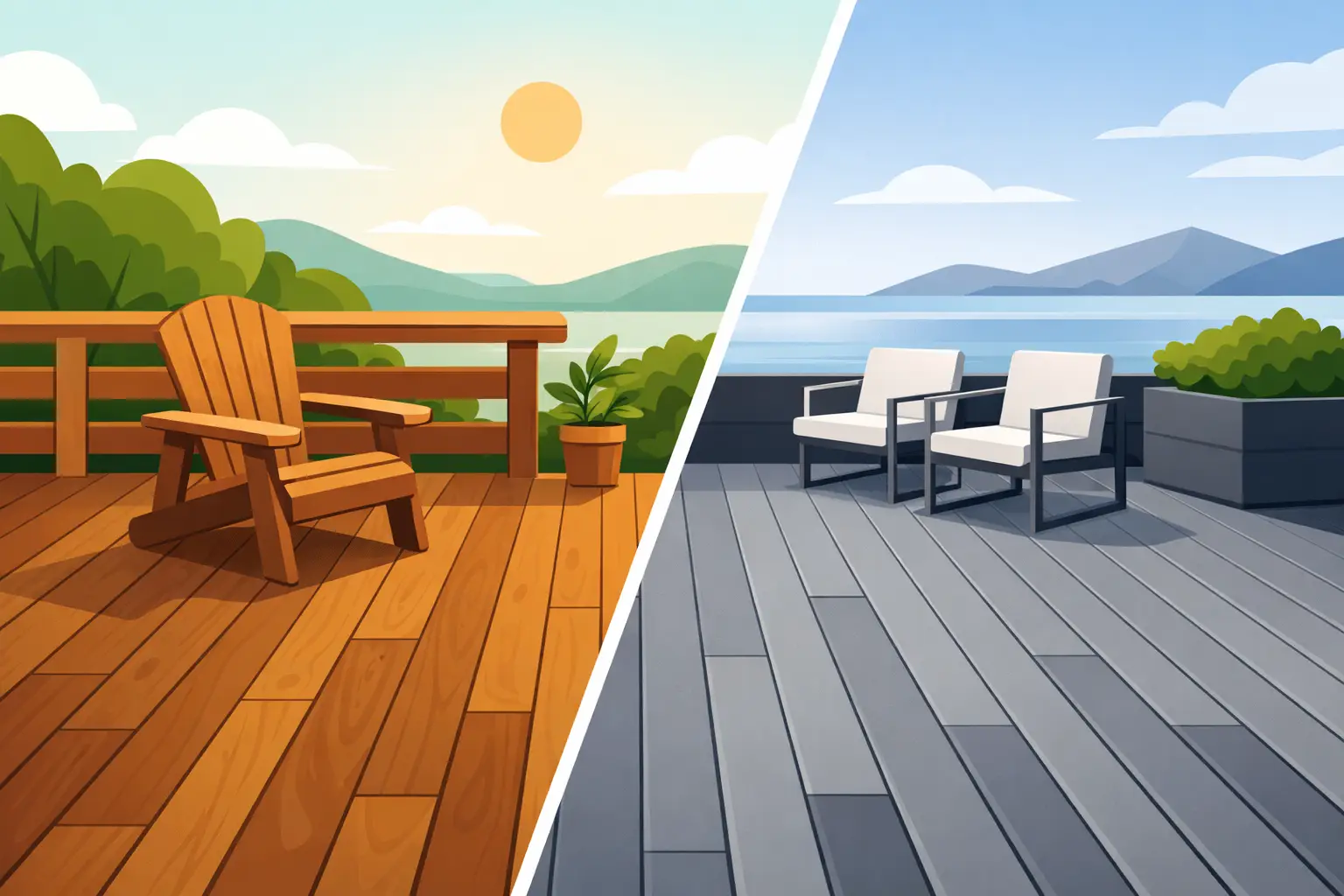
Timber vs composite decking at a glance
Timber decking remains a popular choice because it offers a natural finish that suits many British gardens, period properties and traditional landscaping schemes. It has warmth, character and a look that many people still prefer over any man-made alternative. It can also be a more affordable way to install a deck, especially where upfront cost is the main deciding factor.
Composite decking, by contrast, is usually chosen for ease. It is manufactured from a mix of wood fibres and recycled plastics or similar materials, depending on the product. The main appeal is lower maintenance, improved resistance to rot and a more consistent finish. For busy households, landlords and anyone wanting less annual upkeep, that can be a strong advantage.
Neither is automatically the better option. The right choice depends on your budget, the style of your garden, how much maintenance you are happy to take on and what you expect from the deck over time.
Cost: upfront price versus long-term value
For many customers, cost is where the comparison starts. In most cases, timber decking is cheaper to install than composite. The materials are often more affordable, and there is a wider range of timber options available depending on the finish and specification you want.
That lower starting price can make timber attractive, especially for straightforward garden projects or where a larger deck area is planned. If the priority is to improve the garden without pushing the budget too far, timber can make sense.
Composite usually costs more at the outset. The boards themselves are more expensive, and some systems require specific fixings and subframe considerations. However, the picture changes when you look beyond installation day. Timber often needs staining, sealing or treatment over the years to keep it looking its best and to help protect it from moisture and wear. Composite generally needs far less than regular cleaning.
So the real question is not only what you want to spend now, but what you want to spend and maintain over the next ten or fifteen years.
Appearance and style in real gardens
This is often where homeowners make their final decision. Timber has a natural grain, slight variation in tone and a more traditional character. It tends to sit comfortably in cottage gardens, established properties and landscaped spaces where a softer, more organic finish is wanted.
It also changes over time. Some people like that weathered look, while others do not. If left untreated, timber can fade and silver with age. If maintained, it can keep a richer appearance, but that takes effort.
Composite offers a cleaner and more uniform finish. It suits contemporary gardens particularly well, especially where the design includes modern fencing, simple paving lines or neat raised planters. Colour consistency is one of its strengths, and many customers like the fact that the overall look remains more stable.
That said, some composite products can still look manufactured if the wrong board is chosen for the setting. Good design matters. A deck should suit the property, not just follow a trend.
Maintenance requirements
Maintenance is one of the biggest differences in the timber vs composite decking decision.
Timber needs regular attention. That usually means cleaning, checking for movement or wear, and applying stain, oil or preservative at suitable intervals. In areas with heavy shade or poor drainage, algae and surface slipperiness can also become a concern if the deck is not looked after properly.
For some homeowners, this is not a problem. They are happy to treat timber as part of normal garden maintenance. For others, especially those with limited time or rental properties to manage, it becomes a drawback.
Composite is generally the easier option. It still needs cleaning and sensible care, but it does not require the same routine treatment as timber. That makes it appealing if you want a deck that stays smart with less ongoing work.
Easy does not mean maintenance-free, though. Dirt, leaves and standing moisture should still be dealt with, and installation needs to be done correctly to allow proper drainage and ventilation.
Lifespan and durability
A properly installed timber deck can last well, but its lifespan depends heavily on the timber grade, installation quality and aftercare. If boards are left damp for long periods, if fixings fail or if maintenance is neglected, problems can appear much sooner than expected.
Composite is often chosen for durability. It is less prone to rot, splitting and insect damage, and many products are designed to handle damp conditions better than standard timber. In a climate like Lancashire, that can be a practical benefit.
Still, durability is not only about the board material. The subframe, foundations, spacing and finish all matter. A poor installation can shorten the life of either system. That is why material choice should never be separated from workmanship.
Safety and day-to-day use
Decking needs to work for normal life, not just look good in a photo. If the area will be used by children, older relatives or for regular entertaining, surface feel matters.
Timber can become slippery if algae builds up, and older boards may splinter or develop uneven patches if wear is ignored. Regular care helps reduce these issues, but they are worth factoring in.
Composite boards are often marketed as slip-resistant, and many do perform well, but not all products are equal. Surface texture varies from one range to another. Some boards can also get warmer under strong sun than timber, although in most British gardens this is only an occasional issue rather than a major problem.
The safest route is choosing a suitable product and making sure the deck is installed with drainage, spacing and access in mind.
Which suits Lancashire weather better?
Lancashire gardens have to put up with regular rain, damp air and long periods where surfaces do not fully dry out. That does not rule timber out, but it does mean timber has to be selected and maintained properly.
Composite has an advantage where moisture resistance and lower upkeep are priorities. It can be particularly useful in shaded gardens or on properties where the deck may not receive regular attention throughout the year.
Timber still works well in Lancashire when the installation is done properly and the owner is prepared to maintain it. In fact, many customers still prefer it because the appearance feels more natural and in keeping with traditional outdoor spaces.
So if the question is which is better for the weather, composite often has the practical edge. If the question is which can work well here, both can.
When timber is the better choice
Timber is often the right option when budget is a major factor, when the property suits a natural finish or when the customer is happy to carry out periodic maintenance. It also works well where a bespoke garden design calls for a more traditional look that blends into fencing, sleepers and planting.
For many homeowners, decking is part of a wider garden improvement rather than a standalone product. In those cases, timber can tie in neatly with other external timber features and create a more unified appearance.
When composite is the better choice
Composite is usually the stronger fit when low maintenance is the goal, when the garden design is more modern or when long-term ease matters more than keeping initial spend down. It can also be a sensible choice for landlords or property managers who want a smart, durable finish with less routine treatment required.
If you want a deck that keeps a consistent look and asks less of you year after year, composite is often worth the extra investment.
Making the right decision for your property
The best decking choice is the one that matches how you actually use your garden. A deck outside a busy family home has different demands from a quiet seating area in a smaller garden. A rental property has different priorities from a forever home. Budget matters, but so do maintenance expectations, appearance and the condition of the site itself.
That is why a proper site-based recommendation is usually more useful than a generic online answer. Drainage, levels, shade, intended use and surrounding materials all affect what will perform best. A good installer should talk through those points clearly rather than pushing one product every time.
At Hulme Fencing Lancashire, that practical approach matters because the right result is not just about fitting boards. It is about creating a deck that suits the property, stands up to the local conditions and still feels like a good decision after the first few winters.
If you are choosing between timber and composite, start with honesty about budget, maintenance and the finish you want to live with. The best deck is rarely the most expensive or the most advertised one. It is the one that fits your garden, your property and the amount of upkeep you are realistically prepared to do.