
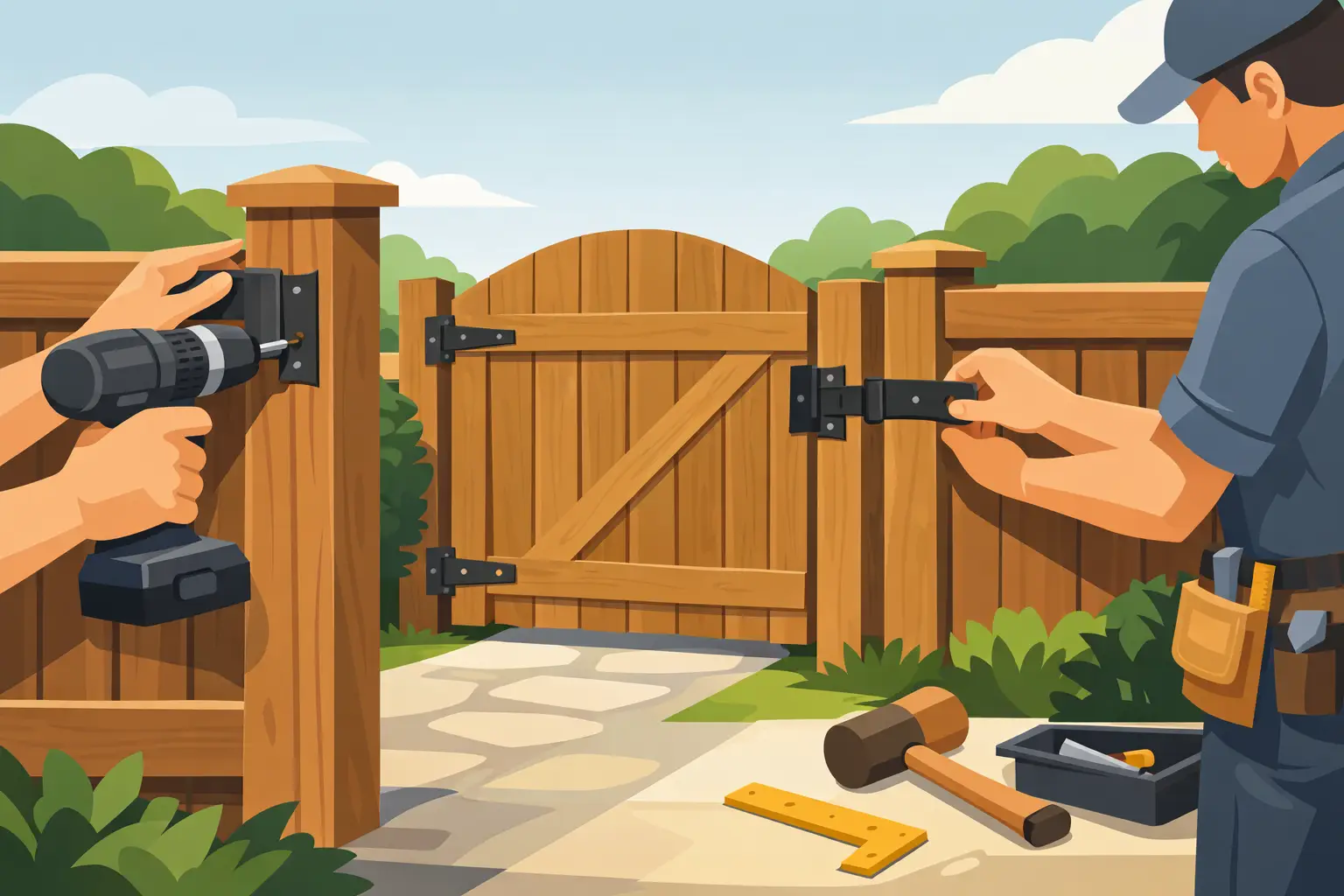
A garden gate that drops after six months, sticks every time it rains or drags across the path is usually not a timber problem - it is a fitting problem. Good timber garden gate fitting is what gives you a gate that opens cleanly, lines up properly and keeps doing its job through wet Lancashire weather.
For homeowners and landlords, that matters more than it might seem at first. A gate is a working part of the boundary, not just a finishing touch. It needs to look right, but it also needs to cope with daily use, changing ground conditions and the weight of solid timber. If the fitting is poor, even a well-made gate can become awkward, loose or short-lived.
What proper timber garden gate fitting involves
A timber gate has to do three things at once. It needs to sit square, swing freely and stay stable over time. That sounds straightforward, but getting all three right depends on more than simply attaching hinges to a post.
The opening must be measured correctly, allowing for clearance without leaving unsightly gaps. The posts need to be strong enough for the gate size and set securely enough to resist movement. Hinges and latches need to suit the gate weight and how the gate will be used. A side gate for regular access to bins or a rear path will often need different hardware and positioning from a decorative garden gate between lawn areas.
This is where experience matters. Timber moves naturally with moisture and temperature changes, and outside conditions across Blackburn, Preston, Burnley and the wider Lancashire area can be hard on gates that have been installed without enough thought.
Why gates fail when fitting is rushed
The most common gate faults are usually visible quite quickly. The gate starts catching on the ground, the latch stops lining up, or the hinge side begins to pull. In some cases, the post itself starts to lean. These are not minor cosmetic issues. They are signs that the fitting was not properly matched to the opening, weight or ground conditions.
A gate that is too heavy for its hinges will always become troublesome. A post set in weak ground without enough depth or support can shift. If clearance has not been allowed for swelling in wet conditions, the gate may work perfectly in dry weather and then become difficult as soon as the timber takes on moisture.
There is also a security point to consider. A poorly fitted gate is easier to force, easier to damage and less reliable when closed. For many households, especially those with children, pets or shared access concerns, that is reason enough to get the installation right first time.
Choosing the right gate for the space
Timber garden gate fitting starts with the gate itself, and not every style works in every setting. Closeboard gates are a popular choice where privacy and strength are the priority. They suit side access and boundary entrances well because they feel solid and secure. Palisade or framed ledged-and-braced styles can work well in more open garden settings where appearance matters as much as privacy.
Size also affects performance. A wider gate puts more strain on hinges, posts and fixings. A taller gate may improve privacy, but it also catches more wind. That is not a reason to avoid larger gates, but it does mean the supporting structure must be planned properly. There is always a balance between appearance, access, privacy and long-term durability.
If the opening is awkward, sloped or older, a made-to-measure approach is usually the better route. Trying to force a standard gate into a space that is not truly standard often leads to visible gaps, poor closing and avoidable wear.
Timber garden gate fitting and the importance of posts
Posts do most of the unseen work in any gate installation. The gate may get the attention, but the post carries the load every day. If the post is undersized, poorly set or already weakened, the rest of the installation is compromised from the start.
For timber gates, post choice should reflect the size and weight of the gate as well as the condition of the site. Heavier gates need substantial support. The depth of the post setting matters, and so does the material around it. Soft or waterlogged ground can need more careful preparation than firm, well-drained ground.
There is also the question of whether existing posts can be reused. Sometimes they can, but not always. If a replacement gate is going onto posts that have already shifted, split or begun to rot, the new gate is unlikely to perform well for long. Reusing old posts can save money in the short term, but only when their condition is genuinely sound.
Ironmongery matters more than many people expect
Hinges, latches, bolts and catches can look like small details, but they affect the whole feel and lifespan of the gate. A solid timber gate needs ironmongery that is suited to external use and strong enough for repeated opening and closing.
Tee hinges are common on lighter timber gates, while heavier designs may call for more substantial adjustable fittings. The latch position also needs to be practical for the user and reliable in daily use. A side gate used several times a day needs smooth operation, not a fiddly catch that becomes awkward in winter.
Finish matters too. Exterior-rated hardware stands up better to rain and general exposure. Cheaper fittings can begin to corrode or loosen early, which affects both appearance and function. It is often false economy to fit a decent gate with weak hardware.
Ground levels, clearance and daily use
One of the biggest differences between a gate that works well and one that becomes frustrating is clearance. Too much clearance and the gate can look poorly fitted or leave room underneath that is no use if you are trying to keep pets secure. Too little and it may catch as soon as the ground shifts or the timber expands.
Sloping gardens make this more involved. The gate swing needs to be planned around the rise or fall of the ground, nearby walls, paths and any fences meeting the opening. In some spaces, a standard single swing works well. In others, the gate style or opening arrangement needs adjusting to avoid drag and strain.
Practical use should always shape the fitting. If wheelie bins need to pass through, the opening width matters. If the gate is used for regular rear access, the latch and swing direction matter. A neat-looking gate is only part of the job. It also has to suit how the property is actually used.
Repairs, replacement and when each makes sense
Not every gate problem means full replacement. If the gate is fundamentally sound and the issue is worn hinges, a dropped latch or a loose fitting, repair may be enough. In other cases, the timber itself may be warped, split or rotting around the fixings, making replacement the more sensible option.
The same applies to posts. If the gate is still in good condition but the supporting post has moved, replacing the post and refitting the gate may restore proper use. The right answer depends on where the failure is and whether the rest of the installation has enough life left in it.
For landlords and property managers, this often comes down to reliability. A quick repair can be worthwhile, but only if it solves the issue rather than postponing a larger problem. Repeated call-backs for the same gate are rarely the most cost-effective route.
Finish, treatment and long-term performance
A properly fitted timber gate still needs looking after. Treatment helps protect the timber surface and slow down weather-related wear. Whether you prefer a natural timber look, a darker stain or a painted finish, the product used should suit exterior timber and be maintained at sensible intervals.
That said, treatment cannot compensate for poor fitting. If water is constantly sitting where it should not, or if the gate is twisting under strain because the support is wrong, surface protection will only go so far. Structure first, finish second.
This is why a professional installation tends to last better. The visible finish matters, but the hidden details usually decide whether the gate still works well in three or five years.
Getting a reliable result locally
Across Lancashire, the weather alone is enough reason not to cut corners on external timber work. Wet spells, frost and ordinary day-to-day use put pressure on every moving part of a garden gate. A sound installation takes account of that from the start.
For property owners wanting security, a tidy boundary and a gate that feels solid every time it is used, proper fitting is the difference between a job that settles in and a job that steadily gets worse. That is why many customers choose a specialist rather than treating gate fitting as an afterthought to the fencing.
If you are planning a new gate or dealing with one that has started to fail, it is worth looking beyond the timber itself. The gate, posts, fixings and opening all need to work together. When they do, the result is simple - a gate that looks right, closes properly and earns its place on the property every day.