
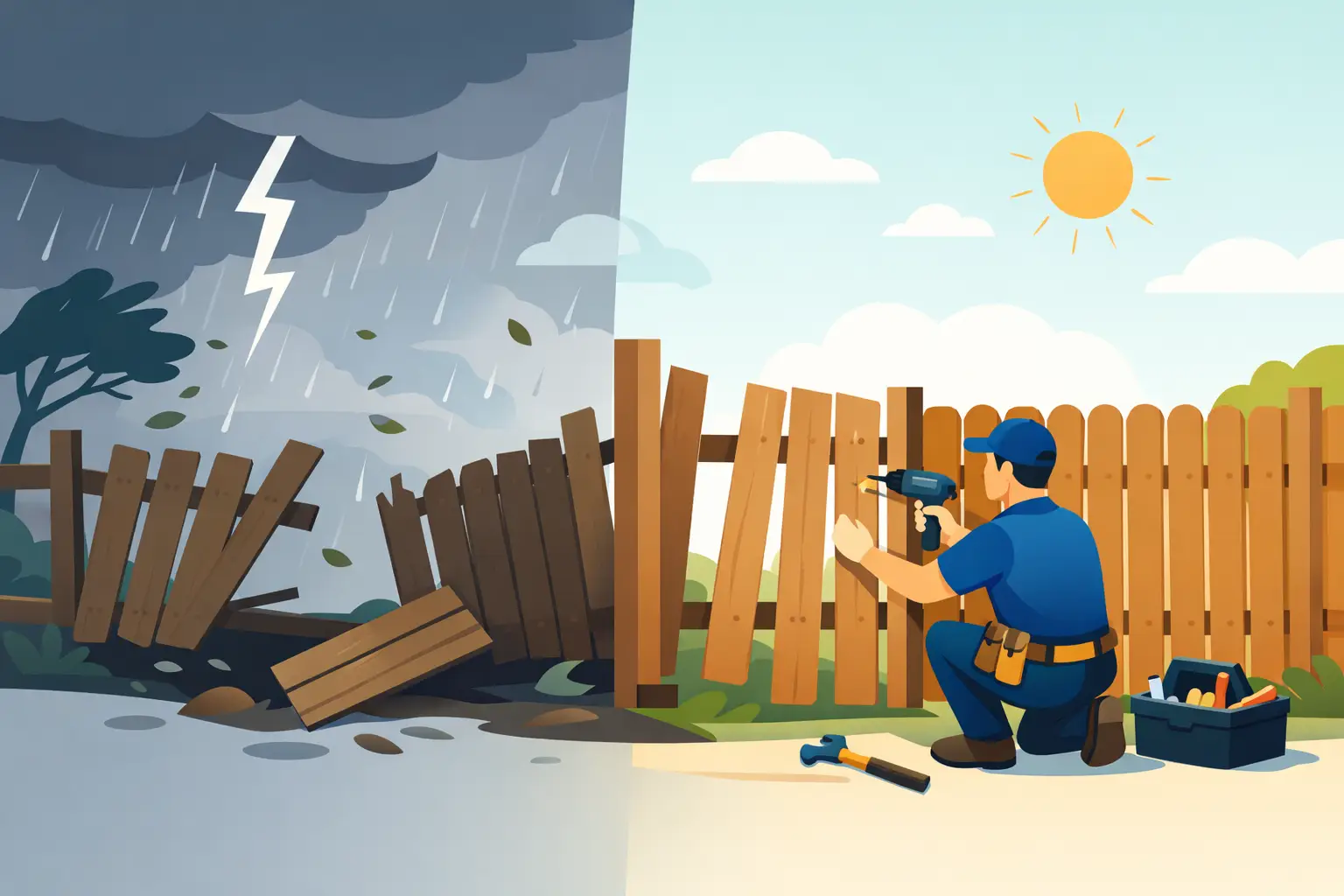
A fence rarely fails all at once. After high winds and heavy rain, the first signs are usually a leaning panel, a loose post, or a gate that no longer lines up properly. Storm damaged fence repair is often more straightforward when the problem is dealt with early, before movement spreads along the rest of the boundary.
For homeowners and landlords across Lancashire, that matters for more than appearance. A damaged fence affects privacy, security and the overall condition of the garden. It can also create problems with neighbouring boundaries if a weakened section is left in place and collapses fully in the next spell of bad weather.
What storm damage usually looks like
Not every fence that looks rough after a storm needs full replacement. In many cases, the damage is limited to one part of the run. A single panel may have blown out, one or two posts may have shifted, or rails may have split where pressure has built up over time.
The most common issue is movement at the post. Once a post loosens in the ground, the panels attached to it lose support and start to lean. Timber rot at ground level often makes this worse, especially on older fences that have already been through several wet winters. Concrete posts can crack as well, though they tend to fail less often than timber if they were installed properly in the first place.
Wind damage also exposes weaker earlier repairs. A panel that has been patched, propped up or fixed with mismatched brackets may hold for a while, but strong gusts usually find the weakest point. That is why a proper inspection matters before deciding whether a quick repair will genuinely solve the problem.
Storm damaged fence repair or full replacement?
This is usually the first question customers ask, and the honest answer is that it depends on the age of the fence, the extent of the damage and the condition of the surrounding sections.
If the damage is isolated, repair is often the sensible option. Replacing one or two broken panels, resetting a post or fitting new rails can restore strength without the cost of renewing the full boundary. This works best where the rest of the fence is still sound, level and structurally reliable.
Replacement becomes the better option when the damage is only part of a bigger problem. If several posts are weak, multiple panels have warped, or the timber is rotting across the run, repairing one section can become false economy. The repaired part may be stronger than the fence beside it, leaving other sections likely to fail next.
A good contractor will usually look at the whole line rather than only the obvious break. That gives you a clearer view of what needs immediate work and whether the remaining fence still has useful life left in it.
The parts of a fence that matter most after a storm
Panels get most of the attention because they are the visible part, but they are not always the real issue. The structure behind them matters more.
Fence posts
Posts carry the load of the entire fence. If they have shifted, cracked or rotted, replacing panels alone will not fix the problem. Timber posts can weaken below the surface where moisture has sat unnoticed for years. Concrete posts are generally more durable, though poor installation or severe impact can still cause failure.
Gravel boards and rails
Gravel boards help protect timber from ground moisture, while rails support the panels and keep everything aligned. When rails split or pull away from posts, the fence starts to lose rigidity. These parts are often repairable, but they should not be ignored just because the panel is still standing.
Gates and adjoining sections
Storms do not only affect straight runs of fencing. Gates often drop or twist after heavy wind, particularly if the adjoining post has moved. Corner sections also take extra pressure and may need more than a basic patch-up.
Why temporary fixes often fail
It is understandable to want a fast fix after a storm, especially where privacy or security is an immediate concern. But there is a difference between making an area safe and carrying out a lasting repair.
Screwing a broken panel back into a weakened post, bracing a leaning section with spare timber or adding random metal straps may hold things briefly. It rarely addresses the cause. If the footing has failed, the timber has rotted, or the fence was never strong enough for the span, the same section is likely to go again.
That can cost more in the long run. A rushed repair may damage neighbouring panels or make later work more complicated. Proper storm damaged fence repair should restore stability, not just improve appearance for a few weeks.
What a proper repair visit should include
A reliable fence repair service should start with assessment, not guesswork. The key points are the condition of the posts, the age and type of fence, the degree of movement across the run and whether replacement materials can be matched sensibly.
Where only one section has failed, the repair may be simple. A damaged panel can be removed and replaced, and any loose fittings tightened or renewed. Where posts have shifted, the contractor may need to reset or replace them before new panels go in. On older fences, it may also be sensible to strengthen adjoining sections so the repair does not leave pressure points either side.
Tidy workmanship matters here. Fence repairs should leave the boundary straight, secure and visually consistent where possible. That is especially important on front gardens, shared boundaries and rental properties where appearance carries weight as well as function.
Choosing materials after storm damage
A storm can be a nuisance, but it can also be the point where an older boundary gets upgraded properly. If replacement is needed, material choice makes a real difference to long-term performance.
Timber fencing remains popular because it suits most residential gardens and can be tailored to the property. It is practical, attractive and cost-effective, but it does need sound installation and sensible maintenance. Pressure-treated timber offers better resistance than untreated softwood, and gravel boards help keep the lower edge clear of persistent damp.
Concrete posts and gravel boards are worth considering where repeated storm exposure is a concern. They tend to provide better long-term support and reduce the risk of rot at the structural points. The trade-off is appearance and budget. Some homeowners prefer the look of full timber, while others prioritise durability and lower future repair risk.
There is no one-size-fits-all answer. A sheltered rear garden in one part of Lancashire may suit a different specification from a more exposed boundary in open wind paths.
How to reduce the chance of repeat damage
No fence is completely storm-proof, but some are far less likely to fail than others. The biggest factor is usually installation quality. Posts need correct spacing, proper depth and secure footing. Panels need to suit the span and exposure level, and gates must be hung with the right support.
Ongoing maintenance helps too. Replacing loose fixings, treating timber before deterioration sets in, and dealing with early movement can all extend the life of the fence. Overgrown shrubs and climbing plants should also be watched carefully. They may look harmless, but in wet and windy conditions they add weight and drag that a tired fence may not cope with.
It is also worth checking fences after each major storm, even if they appear intact from a distance. A slight lean or minor crack is easier and cheaper to put right than a full collapse later on.
When to act quickly
Some storm damage can wait a short while for planned repair, but some cases need prompt attention. If the fence is down onto a pavement, exposing the garden fully, interfering with access, or likely to bring down other sections, it should be dealt with quickly. The same applies where children, pets or adjoining properties could be affected.
For landlords and property managers, speed matters for another reason. A damaged boundary can become a tenant complaint very quickly, particularly where security or garden access is involved. Early repair helps avoid a smaller issue turning into a larger one.
Across Lancashire, weather exposure varies from one area to the next, but the pattern is familiar - high winds, saturated ground and tired fencing do not mix well. That is why many customers choose specialist contractors rather than general trades. A proper fencing repair is about more than putting a panel back up. It is about making sure the full boundary works as it should.
If your fence has taken a hit in recent weather, the best step is usually a clear assessment from someone who handles these repairs regularly. Hulme Fencing Lancashire works with homeowners across the region on practical boundary repairs and replacements that are built to last. A sound fence should not just look straight on the day it is fitted - it should still be doing its job when the next storm comes through.