
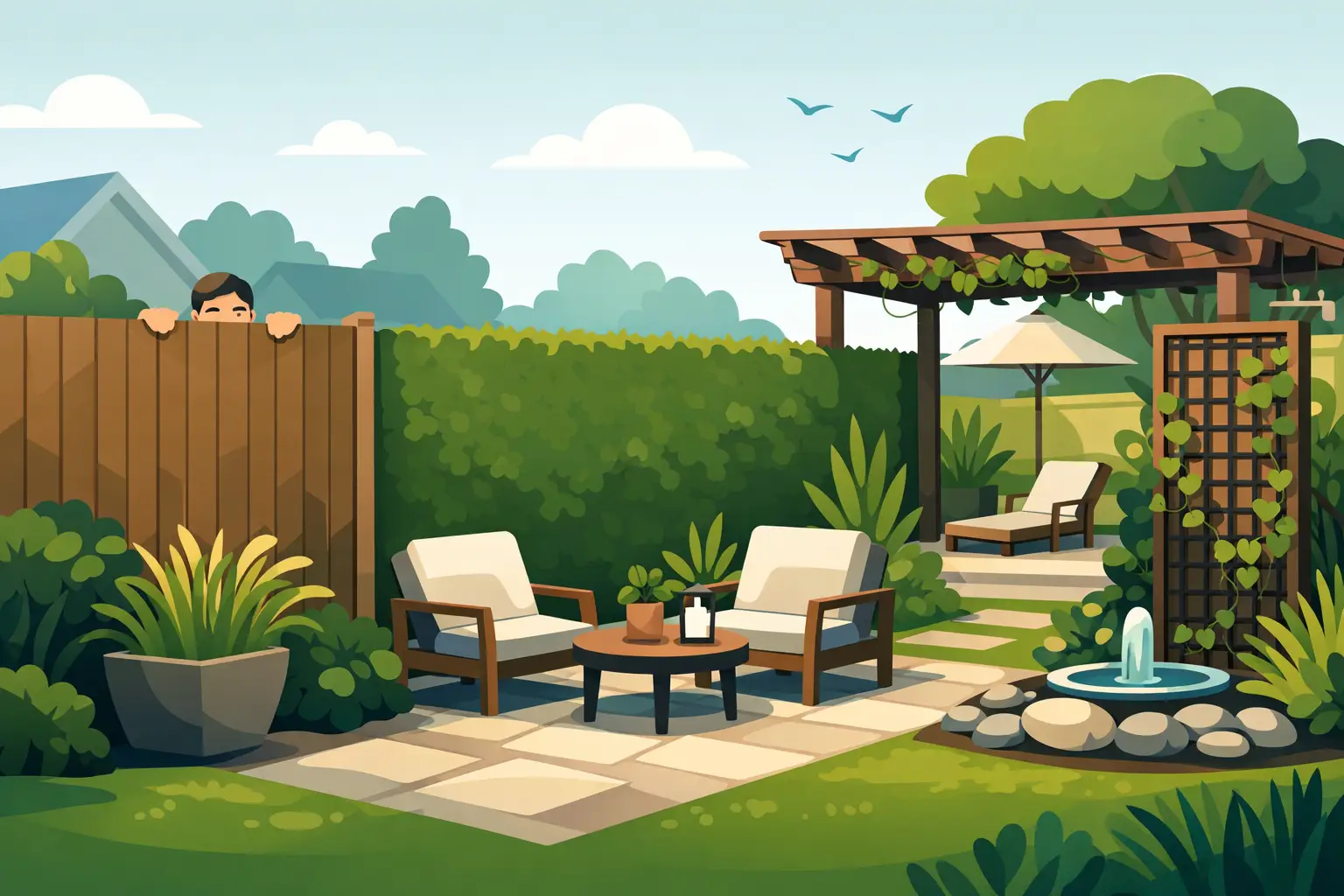
When you sit out in the garden and feel overlooked from the next property, the issue is usually obvious within minutes. A low boundary, a tired fence line, a raised patio next door or gaps between panels can all leave the space feeling exposed. If you are wondering how to improve garden privacy, the right answer depends on what is causing the problem, how permanent you want the fix to be, and how much maintenance you are prepared to take on.
For most Lancashire homes, privacy is not just about blocking a view. It also affects how usable the garden feels day to day. A private space is easier to relax in, safer for children and pets, and often smarter from the rear elevation too. The best results come from treating privacy as part of the overall boundary and garden layout, rather than adding a quick screen as an afterthought.
How to improve garden privacy starts with the boundary
In many gardens, the fence line does most of the work. If existing fencing is too low, damaged, uneven or poorly fitted, it will never provide proper screening no matter what you add around it. Replacing old panels with taller, well-installed fencing is often the most direct way to improve privacy and tidy up the garden at the same time.
Closeboard fencing is a popular choice where strength matters, particularly in more exposed spots. It gives a solid, consistent screen and tends to suit homeowners looking for a durable boundary with a straightforward finish. Feather edge fencing can work similarly well where a more traditional run of fencing is needed. If appearance is just as important as screening, decorative panels may be worth considering, but they need to be chosen carefully. Some look smart while still allowing sightlines through, which defeats the purpose if privacy is the main goal.
Fence height matters, but so does proportion. Going as high as possible is not always the best route. A very tall fence in a small garden can make the space feel boxed in and may reduce light. In some cases, a modest increase in height combined with planting or trellis creates a better balance.
Think about where the overlooking actually comes from
A common mistake is screening the wrong area. Many homeowners focus on the rear boundary when the real issue comes from the side return, a neighbour's upper window or a seating area that is positioned in full view. Before choosing materials, stand in the parts of the garden you use most and look around from eye level.
Your patio, decking or outdoor dining area may need more privacy than the lawn or shed end of the garden. If so, a targeted solution often works better than changing every boundary. A privacy screen near the seating area, a taller section of fencing at one point, or carefully placed slatted screening can solve the main problem without overcomplicating the whole garden.
This is especially useful in newer estates and tighter suburban plots, where properties sit closer together and sightlines are more awkward than they are in older layouts.
Screening can work well, but it needs to look intentional
If a full fence replacement is not necessary, screening can be a practical upgrade. Timber screens, slatted panels and trellis sections are all useful in the right setting. They can break up views, create a sheltered corner and improve the finish of an existing garden without major structural work.
That said, screening needs to be used carefully. Slatted designs look clean and contemporary, but they do not block every angle unless spacing is tight and positioning is right. Trellis can soften a boundary and support climbing plants, though on its own it rarely provides instant privacy. It is better where you are prepared to let planting do part of the work over time.
A screen should also belong to the garden visually. Random panels fixed in different places can make the space feel pieced together. Matching timber finishes, consistent heights and a clear layout usually give a much better result.
Planting helps, but it is rarely the fastest answer
Homeowners often ask whether hedges, shrubs or climbing plants are the best route for privacy. In some gardens, they are an excellent addition. Planting softens the look of fencing, reduces the hard boundary feel and can improve privacy from upper-storey views when used in layers.
The trade-off is time and maintenance. A hedge does not become a screen overnight, and some varieties need regular trimming to stay neat and manageable. Fast-growing options can quickly get out of hand if neglected, while slower-growing choices may test your patience.
For that reason, planting is usually strongest when paired with a solid boundary. A good fence gives immediate privacy. Shrubs, climbers or small trees then improve the finish and add extra cover where needed. That combination tends to suit busy households better than relying on greenery alone.
Decking and patios can create privacy problems as well as solve them
Levels matter more than many people realise. If your decking or patio sits raised above the rest of the garden, you may feel more exposed to neighbouring properties. Equally, if the house next door has a higher terrace or garden step, they may be looking directly into your seating area even with a decent fence in place.
In these cases, the answer may involve changing the layout rather than just adding height. Moving the main seating area, adding screening around part of the deck, or redesigning the garden zones can make the space more comfortable. Privacy is often about positioning as much as enclosure.
This is where practical garden planning pays off. There is little point installing attractive new decking if it leaves you sitting fully on display. A well-thought-out garden should work from the house looking out and from the garden looking back.
Gates, side access and overlooked gaps
Some of the weakest points for privacy are not the main boundaries at all. Side gates, rear access points and narrow passages often let the whole scheme down. A smart run of fencing with an old, ill-fitting gate beside it will still leave the garden feeling exposed and less secure.
If you are improving privacy, it is worth looking at the full perimeter. A properly fitted gate with solid boarding can make a significant difference, especially on corner plots or properties with shared access. Small gaps under panels, broken arris rails or leaning posts can also create clear sightlines that are easy to miss until you start looking for them.
These details matter because privacy and security often go together. A boundary that feels open usually looks less cared for as well.
Choosing the right solution for your budget
Not every garden needs a full redesign. Sometimes replacing a few damaged panels and upgrading one problem area is enough. In other cases, especially where fences are old throughout, doing the job properly in one go can be better value than repeated patch repairs.
Budget should be considered alongside lifespan. Low-cost fixes can be useful short term, but if materials are lightweight or poorly installed, they may not last through bad weather. Lancashire gardens need solutions that stand up to wind and rain, not just something that looks right for one summer.
That is why installation quality matters as much as the product itself. Strong posts, secure fixing, good levels and tidy finishing all affect how private and durable the result will be. A boundary only performs properly when the basics are done well.
How to improve garden privacy without making the space feel closed in
The best privacy improvements do not make the garden feel smaller or darker than it needs to. Solid fencing across every edge can work, but it is not the only option. In many gardens, mixing solid boundaries with lighter features creates a better feel.
For example, a solid rear fence with planted borders can feel less harsh than fencing plus bare paving. A screened seating area can create privacy where you need it most, while the rest of the garden stays more open. Even the choice of timber finish and panel style can affect whether the space feels welcoming or heavy.
This is where experience helps. A practical installer will usually look at the shape of the plot, neighbouring levels, access points and the age of the existing boundary before recommending anything. What works in a detached property outside Clitheroe may not suit a narrow terraced garden in Blackburn or a newer estate plot in Preston.
If you want a garden that feels more private, start by identifying the exact problem areas rather than assuming one product will fix everything. The strongest results usually come from combining a sound boundary, sensible screening and a layout that suits how you actually use the space. Done properly, privacy does not just block a view. It makes the whole garden more comfortable, more secure and far more enjoyable to spend time in.