
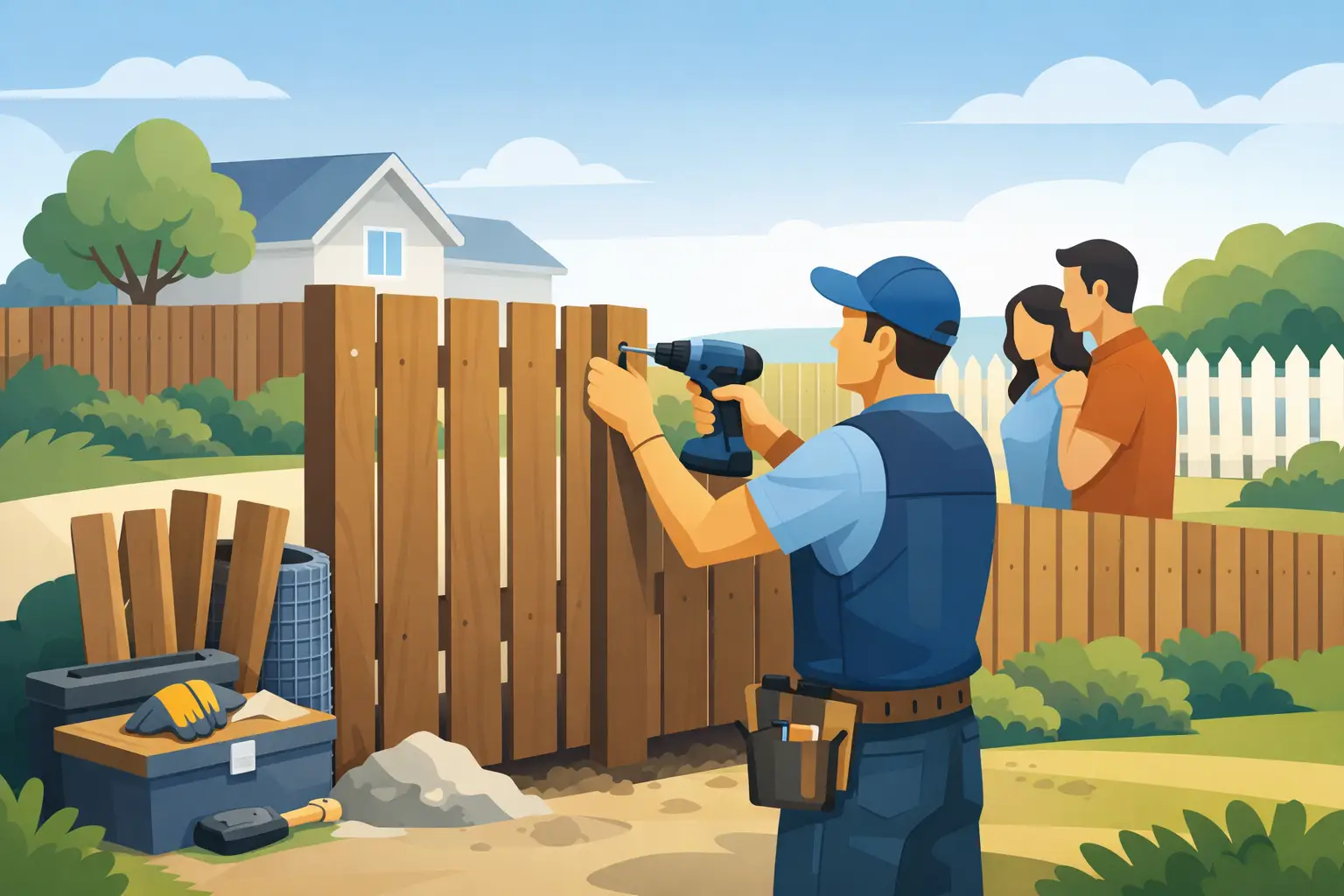
A fence usually starts getting attention when it has already failed - a panel leaning after high winds, a rotten post at the base, or a boundary line that no longer gives enough privacy. A proper domestic fencing installation guide helps you avoid those expensive second jobs by getting the basics right from the start. For homeowners, landlords and property managers across Lancashire, that means thinking beyond the fence panel itself and focusing on ground conditions, post strength, layout, drainage and long-term upkeep.
What a good fence installation needs to achieve
Most domestic fencing has to do more than mark a boundary. It often needs to provide privacy, improve security, stand up to bad weather and keep the garden looking tidy. In some cases it also needs to contain pets, shield a patio from wind, or create a cleaner division between neighbouring properties.
That is why there is no single best fencing option for every home. A tall closeboard fence may suit an exposed rear garden in Burnley or Blackburn, while a lighter decorative run might be enough for a front boundary in Clitheroe or Chorley. The right choice depends on what the fence needs to do, how exposed the site is, and how much maintenance you are prepared to take on over the years.
Domestic fencing installation guide - start with the boundary and the ground
Before any post goes in, confirm exactly where the fence should sit. This sounds obvious, but boundary disputes often begin with assumptions rather than measurements. If an old fence is being replaced, do not rely on the previous line being correct. Check deeds if needed, look at any established markers, and if there is any doubt, sort that out before work begins.
Ground conditions matter just as much. In Lancashire, many gardens are not perfectly level, and some hold water badly after heavy rain. Soft ground, slopes and old concrete from previous installations can all affect the method used. A fence fitted on uneven ground may need stepped panels rather than trying to force everything into a straight line. That usually gives a neater result and avoids awkward gaps beneath the fence.
If the area is particularly exposed, post depth and spacing become even more important. A fence is only as strong as its support. Panels may look solid on day one, but if the posts are undersized or not set properly, wind will find the weakness quickly.
Choosing the right fencing style for the property
Closeboard fencing remains one of the most practical options for domestic gardens. It is known for strength, privacy and decent performance in poor weather. For side and rear boundaries, it is often the most sensible long-term choice. Overlap panels can be more budget-friendly, but they are not always the best option in exposed gardens where wind pressure is a concern.
Feather edge fencing is another strong choice, especially where a more tailored run is needed. Because it is built on site rather than installed as pre-made panels, it can work well on awkward boundaries and uneven plots. It also tends to feel more substantial once finished.
Decorative fencing has its place too, particularly at the front of a property or in garden zoning. Trellis tops, picket styles and lower feature fencing can improve appearance without making the space feel closed in. The trade-off is usually privacy and, in some cases, durability. A smart-looking fence still needs to suit the conditions it will face.
Timber, concrete and mixed material options
Material choice affects lifespan, maintenance and appearance. Timber remains popular because it looks natural and suits most residential gardens. Pressure-treated timber is the usual standard for domestic fencing and gives better resistance to rot and insect damage than untreated wood.
Concrete posts and gravel boards are often chosen where durability is the priority. They resist rot, cope well with damp ground and can extend the life of the fence by keeping timber clear of soil contact. Some homeowners prefer all-timber systems for appearance, while others prioritise reduced maintenance. There is no universal answer here - it depends on whether visual warmth or long-term resilience matters more to you.
A mixed system with timber panels and concrete posts is often a sensible middle ground. It keeps the garden looking domestic rather than industrial, while adding extra strength where it counts. In many Lancashire gardens, especially those with wet patches or exposed boundaries, that can be a worthwhile upgrade.
Installation details that make the difference
A fence can look straight and still be poorly installed. The details below ground level are what usually decide how well it lasts. Posts need to be set at the correct depth for the fence height and local conditions. Shallow setting saves time on installation day but often leads to movement later.
Spacing is another common issue. If panel bays are not measured accurately, installers can end up forcing panels into place or creating inconsistent lines. Neither is ideal. A clean layout should follow the boundary properly, maintain even bays and allow for any changes in level.
Gravel boards are often overlooked by homeowners, but they do a useful job. They lift the main panel off the ground, reduce moisture contact and help protect timber from early decay. On gardens where soil or mulch sits against the fence, this can make a noticeable difference to lifespan.
Fixings matter too. Exterior-grade screws, brackets and fittings should be chosen to suit the system, especially in areas exposed to regular rain. Small corners cut on components often become obvious after one or two winters.
Common mistakes homeowners make
The biggest mistake is choosing a fence on price alone. Budget matters, but the cheapest quote is not always the best value if the materials are poor, the posts are undersized or waste removal is not included. A lower upfront cost can turn into repair costs far sooner than expected.
Another common issue is underestimating wind exposure. A sheltered garden in summer can feel very different in January. Taller fences catch more wind, and certain panel types are less forgiving in open spots. If your property backs onto open land or sits in a corner plot, that should affect the specification.
People also forget to plan for access. Getting materials into a rear garden is not always straightforward, especially on terraced streets or where there is limited side access. This can affect labour time, installation method and even the style of fencing that is practical to fit.
Then there is the question of neighbours. If the fence sits on or near a shared boundary, clear communication before work starts is usually wise. It avoids unnecessary friction and makes the process smoother if access is needed from both sides.
How long should domestic fencing last?
That depends on the materials, the standard of installation and the conditions on site. A well-installed timber fence with proper treatment and sensible maintenance can give many years of service. In wetter ground or highly exposed areas, parts may wear sooner, particularly if the original installation did not include gravel boards or adequate post support.
Maintenance helps, but it cannot fix poor groundwork. Treating timber, clearing vegetation away from the base and keeping an eye on early movement will all help. Still, if posts are failing below ground, cosmetic care will only go so far.
This is why replacement and repair decisions should be made carefully. Sometimes a single broken panel can be swapped out. In other cases, repeated repairs on ageing posts become false economy. If several parts are failing at once, a new run often gives a better result than piecemeal fixes.
Cost considerations and what affects the price
Fence installation costs vary with length, height, material choice, access and site conditions. Removing an old fence adds labour and disposal costs. Sloping gardens, tree roots, old footings and restricted access can all increase the time needed.
The type of finish also has an impact. A straightforward boundary run is one thing. Add bespoke gates, stepped sections, decorative tops or awkward corners, and the job becomes more involved. None of that is a reason to avoid doing the work properly, but it does mean like-for-like comparisons between quotes are important.
When reviewing prices, check what is actually included. Ask whether the quote covers removal of the old materials, post mix or concrete, gravel boards, fittings, and making good around the work area. A tidy finish is part of the job, not an extra people should have to chase.
When it makes sense to use a specialist installer
Some smaller fencing jobs can be tackled by capable property owners, but many domestic installations are better handled by experienced contractors. Long boundary runs, exposed gardens, retaining differences in level and storm-damaged sections all need proper judgement as well as labour.
A specialist installer should be able to advise on the most suitable system for the site rather than offering the same answer for every property. That local knowledge matters. Ground conditions in Preston may differ from parts of Accrington or Darwen, and exposed plots around Lancashire need stronger specifications than sheltered suburban gardens.
For homeowners who want the work done efficiently and to a reliable standard, using an established local fencing contractor is often the safer route. Businesses such as Hulme Fencing Lancashire work on these domestic boundary issues regularly, which means problems are usually spotted before they become delays.
A new fence should not just fill a gap where the old one stood. It should suit the property, cope with the weather and stay solid for years rather than months. If you approach the job with the right specification, clear measurements and a realistic view of the site, you give yourself a far better chance of getting a fence that looks right and lasts.