
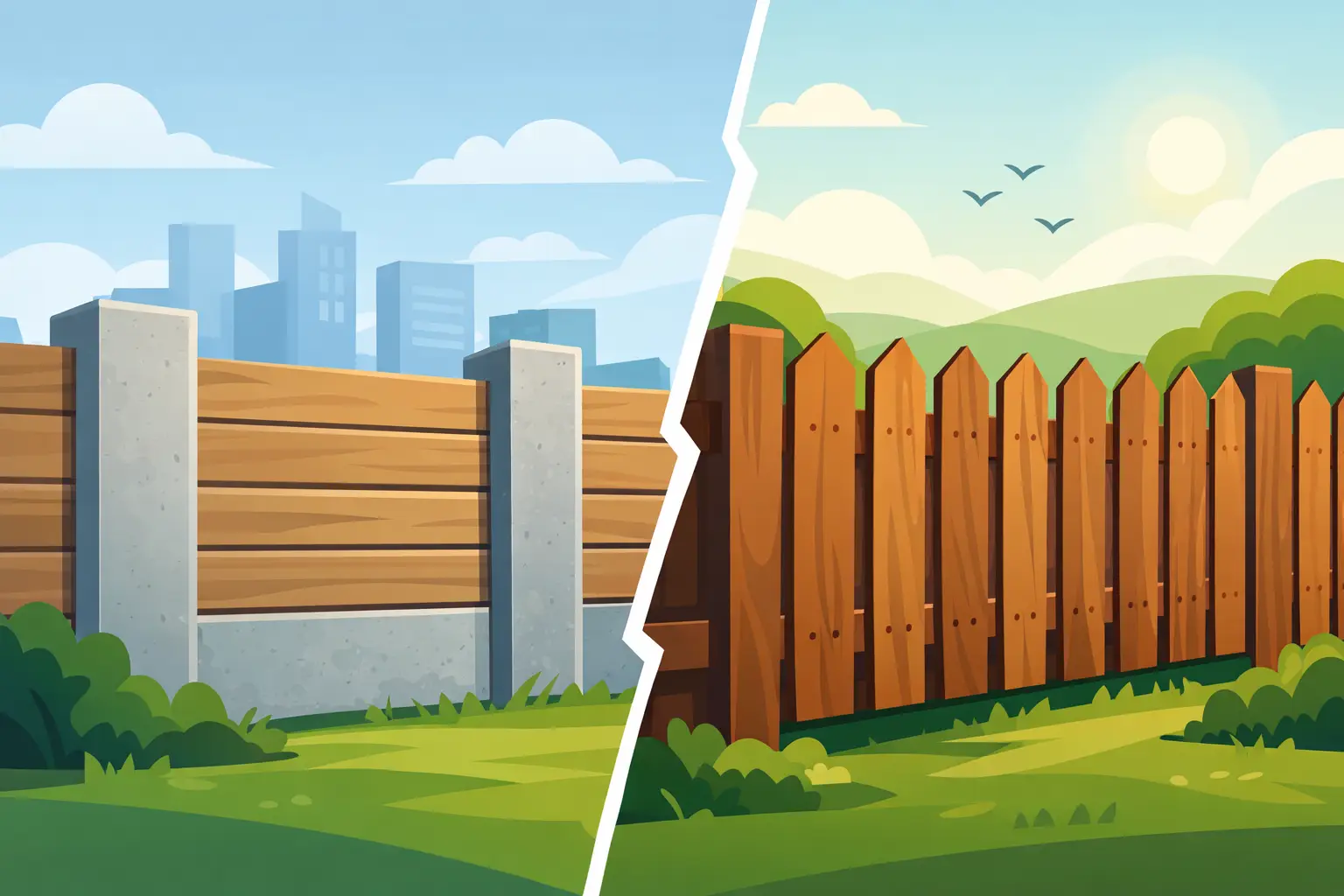
If you are weighing up concrete posts or wood fence options, the right answer usually comes down to what matters most on your property - lifespan, appearance, repair costs or how exposed your garden is to wind and wet weather. Across Lancashire, where fences often take a battering through winter, the post choice matters just as much as the panels.
A lot of homeowners focus on the look of the fence and leave the structure as an afterthought. That is often where problems start. When fence lines fail, it is commonly the posts that shift, rot or crack first. Choosing the right setup at the start can save a good deal of disruption later.
Concrete posts or wood fence: what is the real difference?
At a basic level, this is a choice between two support systems. Concrete posts are heavy, rigid and built for long-term durability. Timber posts give a more traditional all-wood finish and can cost less upfront, but they rely more heavily on treatment, installation quality and ongoing condition.
If the question is purely which lasts longer, concrete posts usually come out ahead. They are not vulnerable to rot, they cope well with damp ground, and they can hold up well in exposed gardens where strong winds put pressure on the fence line. For many householders, that durability is the main reason to choose them.
Wooden posts, however, still have a place. They can suit older properties, cottage-style gardens and settings where a softer, more natural look is important. They are also easier to cut and adapt on site. In the right conditions, with proper treatment and fitting, timber posts can still provide a solid and reliable fence.
When concrete posts make more sense
Concrete posts are often the safer long-term option where the ground stays wet, the site is exposed, or the fence is expected to take regular wear. If your current fence has already failed because the timber posts rotted at ground level, that is a strong sign that concrete may be the better replacement.
This is especially relevant in parts of Lancashire where heavy rain and strong winds are part of normal winter weather. A well-installed concrete post system gives a more secure backbone to the fence. Even if a panel is damaged by a storm, the posts themselves are more likely to remain in place, which makes repairs simpler.
There is also a maintenance advantage. Concrete does not need staining, treating or repainting. Once it is in, the attention usually goes to the timber panels rather than the structure. For landlords and property managers, that lower maintenance requirement can be a deciding factor.
That said, concrete is not perfect. It is heavier to handle, more labour-intensive to install, and usually costs more at the start. Some customers also feel it looks harsher than timber, particularly in smaller gardens where every feature is visible. If appearance is the top priority, that trade-off needs to be considered properly rather than brushed aside.
When a wood fence is the better fit
A wood fence can be the right choice where appearance, budget and consistency of finish matter more than maximum lifespan. Many people simply prefer the look of timber posts and timber panels together. It creates a more uniform run, and for some garden designs that matters.
Timber can also be a sensible option if the fence line is shorter or more decorative than defensive. In a sheltered rear garden, a good quality treated timber fence may give years of service without issue. If the site drains well and the installation is done correctly, timber does not automatically mean short life.
Repairs can also be more straightforward in some cases. Timber is easier to drill, trim and adapt, which can help when dealing with awkward boundary lines or tying into existing wooden structures such as gates, trellis or decking. Where customers want a fully timber finish with no visible concrete, wood remains a popular choice.
The main caution is longevity at ground level. Even treated timber is still timber. Over time, moisture, soil contact and movement can all take their toll. That does not mean it should be ruled out, but it does mean the quality of materials and fitting really matters.
Cost now versus cost later
One of the biggest mistakes is choosing purely on the cheapest initial quote. Concrete posts normally raise the installation cost because of the materials and the extra labour involved. Timber posts tend to be cheaper to supply and quicker to work with.
But the cheaper option at the start is not always the better value over ten or fifteen years. If a timber post fails and the fence has to be partly rebuilt, the savings disappear quickly. In contrast, concrete often costs more to install but can reduce the chance of structural replacement later.
This is where a practical site assessment helps. A sheltered garden in good ground conditions may not need the extra spend on concrete. An exposed boundary backing onto open land probably does. The best choice is not the same for every property, even within the same town.
Repairs matter as much as installation
For many customers, the real test of a fencing system comes after a storm. If one panel blows out, can it be replaced without disturbing the whole run? That is one reason concrete post and slotted gravel board systems are widely used. Damaged panels can often be removed and replaced more easily while leaving the main structure intact.
With timber post systems, repairs vary more depending on how the fence was built. In some cases, a single section can be replaced neatly. In others, post damage means more substantial work. That does not make timber wrong, but it does affect future maintenance and should be factored in from the start.
For households that want a practical, lower-fuss boundary, repairability is worth serious thought. A fence is not just there for the day it is installed. It needs to keep doing its job after bad weather, shifting ground and years of use.
Appearance and kerb appeal
The visual side should not be ignored. A fence has a big impact on how a garden and boundary look, particularly at the front or along a driveway. Concrete posts give a clean, solid and often more modern appearance, especially when paired with quality panels and gravel boards. On some homes, that crisp finish works very well.
On others, a full timber build feels more in keeping. Period properties, softer garden schemes and rural settings often suit timber better. If you are replacing only part of an existing boundary, matching what is already there may also matter.
There is no universal winner on looks. It depends on the style of the property, the surrounding garden features and whether the priority is visual warmth or structural permanence. A good contractor should be honest about both rather than pushing one option for every job.
Concrete posts or wood fence for Lancashire homes
For many homes across Blackburn, Preston, Burnley and the wider Lancashire area, concrete posts paired with timber panels strike the best balance. You get the strength and durability of concrete where it matters most, while keeping the warmer look of timber across the visible face of the fence.
That mixed system is especially useful on boundaries exposed to driving rain or strong winds. It is also a popular choice for customers who have already had repeated trouble with rotten wooden posts. Hulme Fencing Lancashire regularly sees this on replacement jobs where the old fence looked acceptable above ground but had already failed below it.
Still, there are situations where an all-timber fence remains the better fit. If the property style calls for it, the site is well sheltered and the budget is tighter, timber can still be a sensible and attractive solution. The key is making that choice with a clear view of the trade-offs.
So which should you choose?
If your top priorities are strength, lower maintenance and longer structural life, concrete posts are usually the better investment. If you care most about a natural finish, lower initial cost and a traditional look, a wood fence may suit you better.
The right answer depends on the ground, the exposure, the style of the property and how long you want the fence to last without major intervention. A good fence should suit the boundary it is built for, not just the brochure picture.
If you are replacing a tired or storm-damaged fence, it is worth thinking beyond the panels. The post choice is what often determines whether the new boundary still stands firm years down the line.