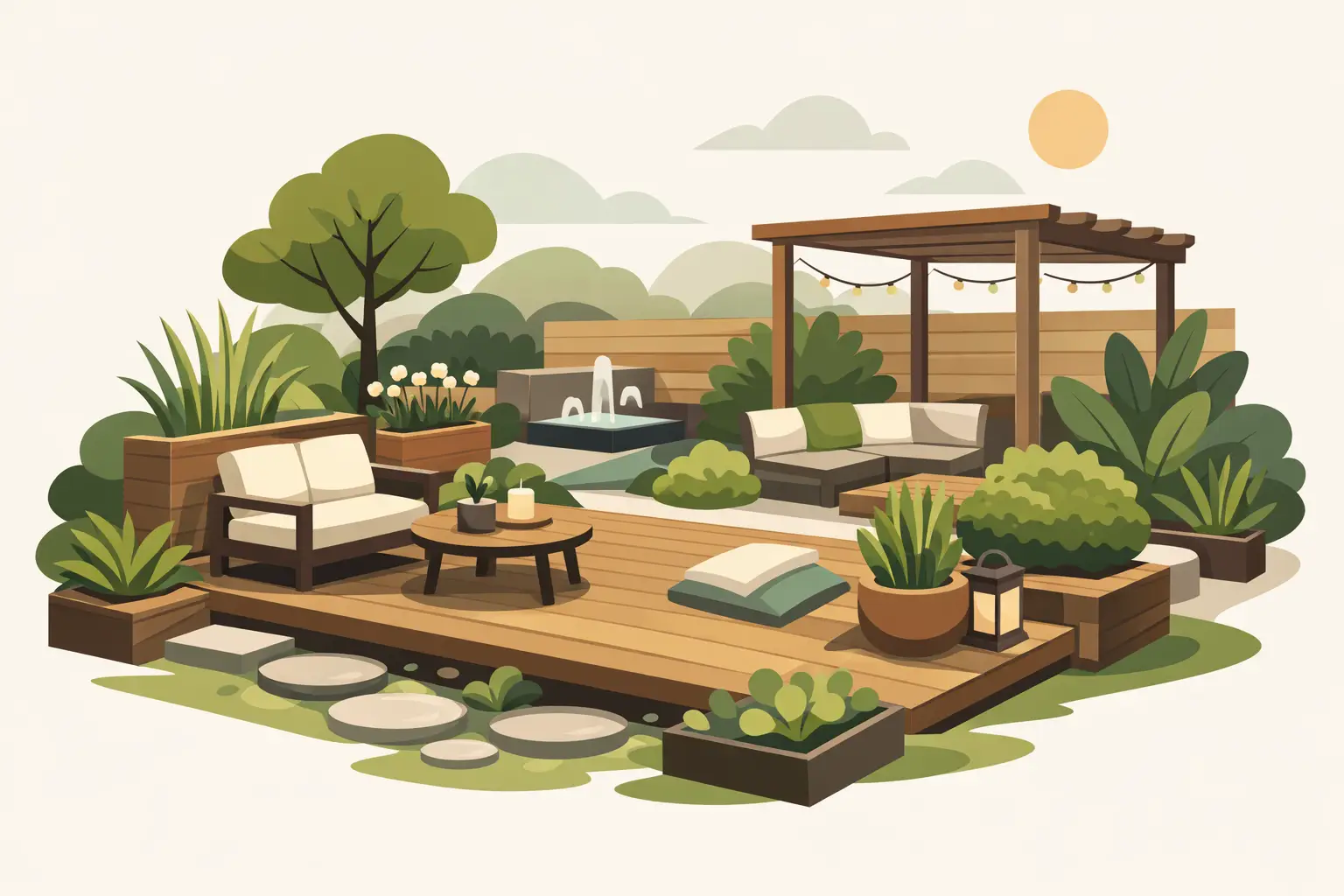
A small garden can feel awkward long before it feels useful. One patch of paving, a strip of lawn and a few leftover planters often leave the space looking tighter than it really is. The right garden decking ideas small gardens benefit from are the ones that create shape, improve flow and make every square metre work harder.
For many Lancashire homes, decking is less about adding luxury and more about making a compact outdoor area easier to use. It can level out uneven ground, provide a clean sitting area and help separate dining, planting and access routes without cluttering the garden. The key is choosing a layout that suits the size of the space rather than forcing in a design that belongs in a much larger plot.
Garden decking ideas for small gardens that make space work
In a smaller garden, decking should solve a problem. That might be poor drainage near the back door, a garden that feels too narrow, or a sloped area that is hard to furnish. Once the practical issue is clear, the design decisions become much easier.
A simple corner deck is often one of the best starting points. It takes up less visual room than a full-width platform and gives you a clear destination for a bistro set or bench. In a square or boxy garden, this can soften the layout and stop everything feeling too straight and rigid.
A full-width deck can work well too, but usually only when it is kept shallow. Running decking across the back of the house creates an easy transition from indoors to outdoors, which can make the garden feel bigger from inside the property. The trade-off is that going too deep can eat into planting space and leave the rest of the garden feeling squeezed.
Raised decking is useful where the ground is uneven or where you want to create a clear seating platform above a damp area. In a small garden, though, too much height can dominate the plot. A low raised deck with neat steps tends to feel more balanced than a tall structure, especially near boundary fencing.
Use shape and direction to change how the garden feels
One of the most overlooked small garden decisions is board direction. Decking boards laid lengthways can visually stretch a narrow garden, while boards laid across the width can make a very long plot feel less tunnel-like. It is a small detail, but it changes the overall impression.
Diagonal decking can add interest, particularly in awkward corners, though it is not always the most cost-effective option because it creates more cutting and material waste. For some homeowners, that extra detail is worth it. For others, a straight layout with a picture-frame border gives enough definition without pushing the budget up.
Curved edges can soften a hard landscape, but in compact gardens they need to be used carefully. A gentle curve around a planting bed can look smart. Too many shapes at once can make the space feel fussy. Simple lines usually win in smaller plots because they keep the eye moving cleanly through the garden.
Built-in features save room
Freestanding garden furniture can take over a small deck very quickly. Built-in seating is often a better option because it uses the perimeter of the space rather than crowding the centre. A bench along one side of the deck can provide plenty of seating without the bulk of several chairs.
Storage benches are particularly useful for family gardens and rental properties. Cushions, small tools and children's outdoor items can be kept out of sight, which helps the garden stay tidy. In a compact space, clutter shows up fast, so built-in storage has a real practical value.
Planters integrated into the deck can also help. Instead of lining pots around the edges and reducing walking space, fitted planting zones keep everything contained. This works well if you want screening plants near a seating area or a bit of colour without losing usable floor space.
If privacy is an issue, a slatted screen attached to part of the deck can make the area feel more enclosed and comfortable. The important thing is not to overdo it. Heavy screening on every side can make a small garden feel boxed in, especially if neighbouring fences are already high.
Split levels can help - but only when the garden suits it
A split-level design can be very effective in small gardens with a natural slope. Rather than fighting the levels, decking can turn them into defined zones. You might have one platform for seating and a slightly lower section for access or planting. That approach often feels more intentional than trying to flatten the entire area.
Where the garden is already flat, adding multiple levels just for style can be less practical. Steps break up the available floor area and can be awkward in family spaces or for older homeowners. If the garden does not need level changes, a single well-planned deck is often the better choice.
This is where a site-specific approach matters. What looks good in a photo does not always work in a terraced garden in Blackburn or a narrow rear plot in Burnley. Good decking design starts with how the garden is used day to day, not just how it looks on paper.
Keep materials and colours consistent
Small gardens benefit from restraint. Too many finishes can make the layout feel busy, so it usually helps to keep the decking colour in step with the rest of the garden. Natural timber tones tend to sit comfortably alongside fencing, gates and planting, while grey finishes can look sharp in more modern spaces.
If you already have timber fencing, matching or complementary tones can create a more unified look. That continuity makes the space feel better planned and, in many cases, slightly larger. Strong contrast can work, but it needs confidence and a very tidy overall design.
Composite decking is often chosen for lower maintenance, while timber decking can offer a more traditional appearance. Neither is automatically better. Composite can be a sensible option for busy households that want less upkeep, but some homeowners prefer the natural character of timber and are happy to maintain it. The right choice depends on budget, appearance and how much ongoing care you are prepared to take on.
Lighting matters more in compact spaces
Lighting has a bigger impact in a small garden than many people expect. A few well-placed deck lights or low-level step lights can make the area feel more inviting and usable in the evening without taking up any physical room.
The aim is not to over-light the garden. Harsh lighting can make a small outdoor area feel exposed rather than welcoming. Soft, practical lighting around the seating edge, steps or access points is usually enough.
If the deck sits near the house, lighting can also improve the view from inside. That matters in smaller properties where the garden is often seen from the kitchen or living room every day, not just used in good weather.
Combine decking with other surfaces carefully
Decking does not need to cover the whole garden to have an impact. In fact, in small plots it often works better when combined with another surface such as gravel, paving or a narrow planted border. This breaks the garden up in a useful way and stops the deck from feeling too dominant.
A small deck with a surrounding gravel margin can improve drainage and reduce maintenance around the edges. Pairing decking with paving can work well near rear doors or side returns where foot traffic is heavier. The important part is keeping the palette simple so the space still feels coherent.
Where gardens are especially tight, losing all greenery can be a mistake. Even a slim border or a couple of built-in planters can stop the area feeling too hard. The best small gardens usually balance practical surfaces with enough planting to keep the space alive.
Practical points that are easy to miss
The best-looking deck will disappoint if it is awkward to use. In small gardens, proportions matter. A deck needs enough clear space for furniture and movement, not just enough room to physically fit it in. A dining set that looks fine in a showroom can overwhelm a compact outdoor area once installed.
Drainage should also be considered early. Decking can help manage a difficult area, but poor planning around runoff, air circulation and adjacent surfaces can create long-term issues. This is particularly relevant in gardens that already hold water after heavy rain.
Boundary lines matter too. Decking close to fences should be designed with maintenance access and the overall garden width in mind. If the structure crowds the edges, the whole plot can feel pinched. A well-fitted deck should improve the garden's flow, not make it harder to move around.
For homeowners looking at garden upgrades as part of a wider improvement, it often makes sense to consider fencing, gates and decking together. Consistent materials and a joined-up layout tend to deliver a better result than treating each feature as a separate job. That is often where experienced local installers such as Hulme Fencing Lancashire can add value, because the design has to work with real site conditions rather than ideal ones.
Choosing the right idea for your garden
The strongest small garden decking schemes are usually the simplest. A compact corner platform, a shallow entertaining area off the house, or a neat raised deck with built-in seating can all work well when they match the shape of the garden and the way you actually use it.
If your garden is narrow, focus on lines that improve the sense of width or length. If it is uneven, use decking to solve the level change cleanly. If storage is a problem, build it in rather than adding more furniture later. Good design in a small garden is rarely about squeezing more in. It is about removing wasted space and making the finished layout feel easier to live with.
A small garden does not need a complicated makeover to feel better. Often, one well-planned deck in the right place is enough to turn an underused patch into part of the home.