
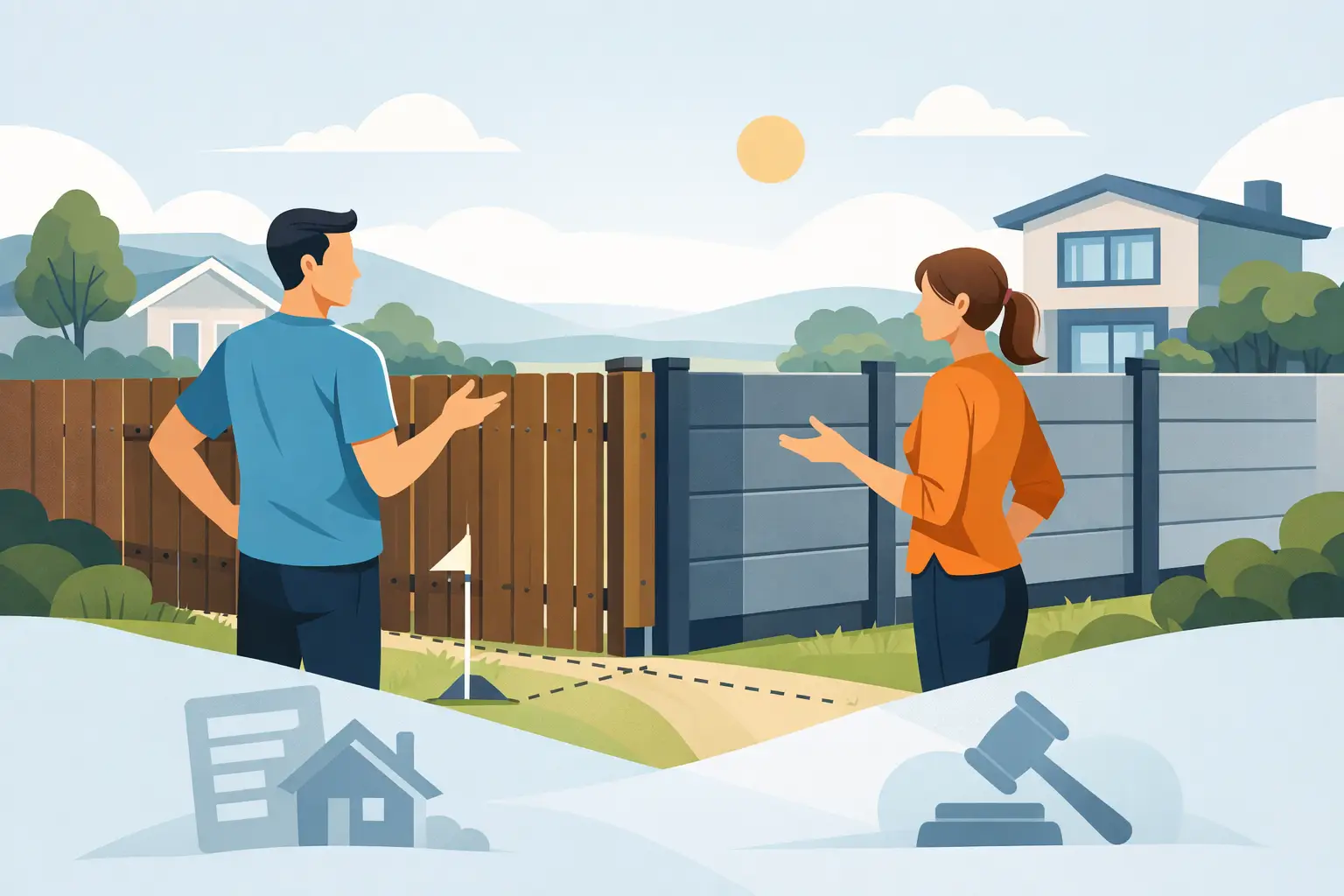
A fence panel comes down in bad weather, and the first question is usually not about style or cost - it is who is responsible for boundary fences in the first place. If you are a homeowner, landlord or managing a residential property in Lancashire, that question matters because it affects who pays for repairs, who can authorise replacement work and how quickly a boundary problem gets sorted.
The short answer is that there is no single rule saying the left-hand or right-hand fence always belongs to one property. Responsibility depends on the title deeds, transfer documents, Land Registry information and, in some cases, past agreements between neighbours. That is why boundary fence disputes often become frustrating - what seems obvious on site is not always what the paperwork says.
Who is responsible for boundary fences legally?
In England and Wales, ownership of a boundary fence is not decided by a blanket national rule based on which side of the property you stand on. Many people still repeat the old idea that you own the fence on the left as you look out from the back door, but that is not something you should rely on.
Legal responsibility usually comes from the property documents. These may show which boundary you must maintain, or whether there is a shared arrangement. Sometimes there is a T-mark on a plan, which can indicate responsibility for a particular boundary feature. If there is an H-mark, that may suggest a party boundary, meaning shared responsibility. Not every property has these marks, and not every plan is detailed enough to settle the matter on its own.
This is where people get caught out. A boundary line on a title plan is often general, not precise to the inch. It can help point you in the right direction, but it may not prove exactly who owns a particular run of timber fencing, posts or gravel boards.
What to check first
If you need to work out who is responsible for boundary fences, start with the paperwork rather than assumptions. Title deeds and transfer documents are the most useful place to begin. If your property is registered, the Land Registry title register and plan may also provide clues, although they are not always enough on their own.
If the property is newer, the original transfer from the developer may set out maintenance obligations clearly. On older homes, the wording can be less specific. Some documents refer to boundary structures in legal language that is not easy to interpret, so it is worth reading carefully before making decisions or confronting a neighbour.
It also helps to look at whether there is a history of one household maintaining a particular fence. While that does not automatically prove ownership, it can support the wider picture if there is uncertainty.
When a fence is shared
Not every boundary fence belongs entirely to one side. In some cases, a fence may be treated as shared, especially where both neighbours benefit from it and there is no clear evidence that one party alone is responsible.
That does not always mean the cost is split 50-50 by default. Shared situations still depend on what the documents say and what both parties agree. One neighbour may want a straightforward repair, while the other wants a full upgrade with concrete posts and new panels. That is where practical discussions matter. You may both accept that the existing fence needs attention but disagree on the type of replacement and the budget.
A sensible approach is to separate essential work from optional upgrades. If a fence is unsafe or has failed, there is a stronger case for agreeing basic remedial work first, then discussing extras such as higher panels, decorative trellis or premium materials.
If the fence is damaged in a storm
Storm damage is one of the most common triggers for boundary disagreements. Strong winds do not wait for title documents, and once panels are down, people want a quick answer. If you know the fence is yours, you would usually be responsible for arranging repair or replacement. If responsibility is unclear, it is best to avoid removing everything in haste unless there is an immediate safety issue.
Take photographs of the damage, especially if posts have failed, panels have blown into another garden or parts of the fence are leaning dangerously. If insurance might be relevant, those records can help. Some household policies may cover storm damage in certain circumstances, but excesses, age of the fence and policy terms all affect whether a claim is worthwhile.
In practice, many people choose to get the fence made safe and deal with the paperwork question alongside that. A damaged boundary can affect security, pets, children and garden use, so there is often a balance between acting quickly and making sure the right party takes responsibility.
Can you replace a neighbour's fence?
If a fence belongs to your neighbour, you should not simply remove it and replace it because you do not like how it looks. Even if it is old or unattractive, it may still be their boundary structure. Replacing it without agreement can create a bigger dispute than the original problem.
If the fence is yours, you generally have more control over repairs or replacement, but you still need to be careful about the exact boundary line and access. Workmen may need to enter the neighbouring side to complete certain repairs properly, and that should be discussed in advance.
Where neighbours are on reasonable terms, most fence problems are sorted with a simple conversation. Explain what has happened, what the documents suggest and what work is needed. Keep it factual and practical. That usually gets better results than turning a maintenance issue into a personal argument.
Common myths about boundary fences
One of the biggest myths is that there is a universal left-side rule. There is not. Another is that Land Registry plans always settle the matter precisely. They often do not, because title plans show general boundaries rather than exact legal positions in many cases.
There is also a belief that if you paid to replace a fence years ago, it automatically became yours forever. Not necessarily. Paying for repairs or replacement may have been a practical choice at the time, but ownership and responsibility still come back to the legal position unless a new agreement was made.
Finally, some people assume that if a fence is on your side of the boundary line by a few inches, it must be yours. Again, that depends. Fence placement and legal boundary ownership are related, but they are not always identical.
What if there is a dispute?
If you and your neighbour disagree, keep the issue focused on evidence. Start with deeds, title information and any previous written agreements. If things are still unclear, a property solicitor or chartered surveyor may be needed, especially where the dispute affects value, access or future saleability.
It is usually better to avoid escalating too quickly. A boundary row can drag on far longer than the cost of the fence itself. For many households, a practical compromise is the cheapest and least stressful route, particularly if you will be living next to each other for years.
That said, compromise does not mean guessing. If you are spending money on a full replacement, especially on a long run of fencing, it is worth having reasonable confidence about ownership and permissions before work starts.
Practical signs that help on site
Paperwork comes first, but site conditions can still be useful. The side of the fence with rails and posts facing inwards is sometimes assumed to indicate ownership, but this is not a hard rule. Some installers fit the finished face outward for appearance, while others follow customer preference, security concerns or the layout of the garden.
The age and construction of the fence can also tell part of the story. A boundary that has clearly been replaced in sections over many years may not match the original legal arrangement neatly. Posts may have shifted, panels may have been swapped and old boundaries may have been altered during landscaping works.
That is why a practical inspection should support the documents, not replace them.
Getting the fence sorted properly
Once responsibility is clear, the next step is choosing the right solution for the site. A quick panel swap may be enough for minor damage. In other gardens, repeated wind exposure, poor post foundations or rotten timber mean a more durable replacement is the better long-term option.
For homeowners across Lancashire, that often means looking beyond the immediate repair bill and thinking about lifespan, strength and maintenance. Timber fencing remains popular because it suits most residential boundaries and can be tailored to the property, but the detail matters. Better posts, proper fixing methods and a tidy installation make a real difference when the weather turns.
If you are unsure where responsibility starts and ends, or you need a damaged boundary inspected before arranging work, getting advice from an experienced fencing contractor can help you plan the practical side sensibly. Hulme Fencing Lancashire regularly deals with repair-led boundary issues where speed, clear workmanship and a straightforward approach matter just as much as the finished fence.
A boundary fence is there to provide security, privacy and a clean edge to the garden, but the real value is peace of mind. The sooner responsibility is clarified, the easier it is to move from neighbourly uncertainty to a proper fix.